
A new Jackson City ordinance that takes effect Sept. 1 is an effort to cut down on the over-population of animals in neighborhoods. The new ordinance will require pet owners to spay or neuter their dogs and cats within 30 days after their pet’s six-month birthday.
According to a press release, residents who do not want to spay or neuter their pets have the option to apply for a waiver from the City’s Animal Care Center. The permit fee is $20 per pet per year.
“Thousands of dogs and cats in Madison County die each year because no one wants them,” said Kathleen Huneycutt, director of the city’s Health and Sanitation Department. “This law was adopted to humanely address the issue of homeless pets in our community. The cost to spay or neuter is a lot less than the cost to feed, worm and vaccinate an entire litter of kittens or puppies.”
WAG Jackson, a fund of the West Tennessee Healthcare Foundation, has launched a website, wagjackson.com, to help the community understand the new law and offer assistance to those wishing to comply. The website lists vets in the Jackson area and costs. Pet owners can use the website to apply for the permit to not spay or neuter their animal and pay the permit fee. The fee, which goes to the Foundation, is then reinvested back into the community to provide grants to those needing financial assistance to spay or neuter a pet.
People over 50 can also use the website to apply for a grant to defray the cost of spaying or neutering their pets. The grant will cover $60 for cats and $75 for dogs for up to two pets per applicant.
Grant and permit applications are also available at the Animal Care Center, 23 Pinnacle Drive.
Jackson’s new ordinance, which was passed by the City Council on June 4, provides exceptions for police dogs, search and rescue dogs, service dogs, herding dogs, livestock guardian dogs, hunting dogs, and show dogs with certification from the American Kennel Club. Other exceptions are made for shelters and boarding facilities or pets with a letter from a vet.
Spaying prevents a female animal from reproducing. Neutering prevents male animals from reproducing.
Female cats can breed three times a year and have an average of four kittens per litter, according to the American Society for the Prevention of Cruelty to Animals (ASPCA). Dogs can breed twice a year with litters of six to 10 puppies. In just seven years, one non-spayed female cat and her offspring can produce 420,000 kittens; one non-spayed female dog and her offspring can produce 97,000 puppies.
Each year, approximately 1.5 million shelter animals in the United States are euthanized, the ASPCA says.
“This new law will set a precedence across the state to help control the explosive pet population, especially in Madison County,” said former Jackson veterinarian Dr. Danny Walker, a professor of the UTM Veterinary Technology Program. “The cost is minimal, but the effects are exponential. The benefits for the animals include longer and healthier lives, less uterine infections and less mammary cancer, no heat cycles, less roaming for males and, most importantly for the community, fewer stray animals on the street. Every year millions of animals across the United States are euthanized or suffer as strays. We as responsible citizens can make a difference, and this is a great start.”
Frank McMeen, president of the West Tennessee Healthcare Foundation, agreed. “Spaying and neutering our pets is a quality of life issue – not just for the people in our community, but for unwanted pets, too. It is sad that the city must act to make some pet owners to be responsible for their pets. Neighbors seem to bear the cost of irresponsible pet owners who live in our neighborhoods.”
“There just aren’t enough people available to adopt all the dogs and cats that wind up in shelters,” Huneycutt said. “Responsible pet owners spay and neuter their dogs and cats. It not only can improve their pet’s health and personality, it also helps address the problem of overpopulation.”
Pet owners who do not comply with the new city law face city fines of up to $50 per violation per day.
For more information about the new law, visit wagjackson.com or call the Jackson Animal Care Center at (731) 422-7028.
For more information about the grant or to donate to help cover spay and neuter cost for those needing financial help, visit wagjackson.com or call the Foundation at (731) 984-2140. WAG Jackson is a Wellness for Animals Group promoting responsible pet ownership in Jackson and Madison County.
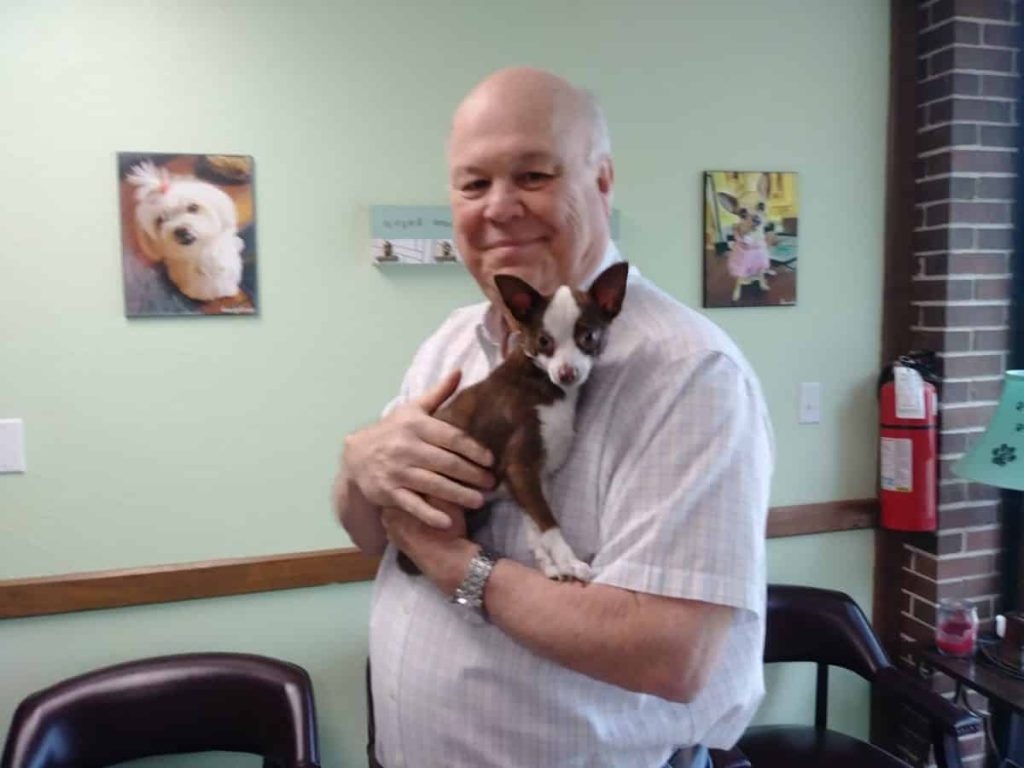
(PHOTO: Harry Henry, executive director of the Jackson Animal Care Center)
David Thomas, Twitter – @DavidThomasWNWS
https://www.facebook.com/NewsTalk1015/