
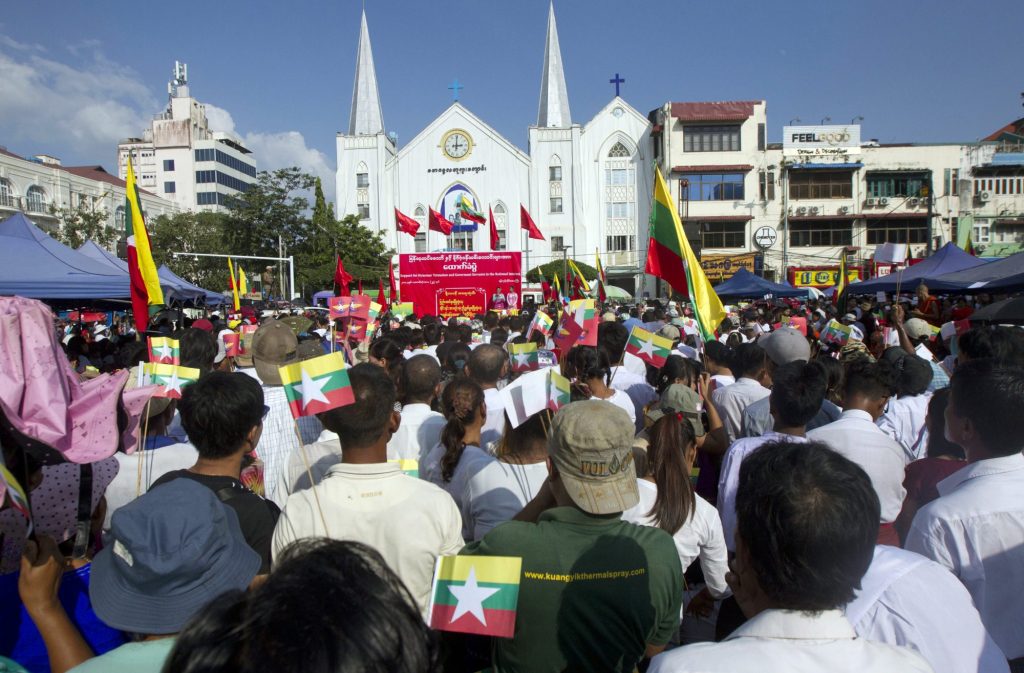
BANGKOK (AP) — Myanmar, long isolated both by choice and by international sanctions, has undergone a transformation. A former political prisoner, Nobel Peace laureate Aung San Suu Kyi, leads a civilian government, sanctions have eased and foreign investments are being made.
Yet the most striking change may be the majority Buddhist Burman population’s view of its military: An institution once despised has seen its popularity surge alongside a rise in nationalism that has accompanied a crackdown on Rohingya Muslims in Rakhine state in western Myanmar that has left thousands dead and more than 650,000 displaced.
While most of the outside world is appalled by the crackdown, many in Myanmar support it and bristle at international condemnation of rights abuses.