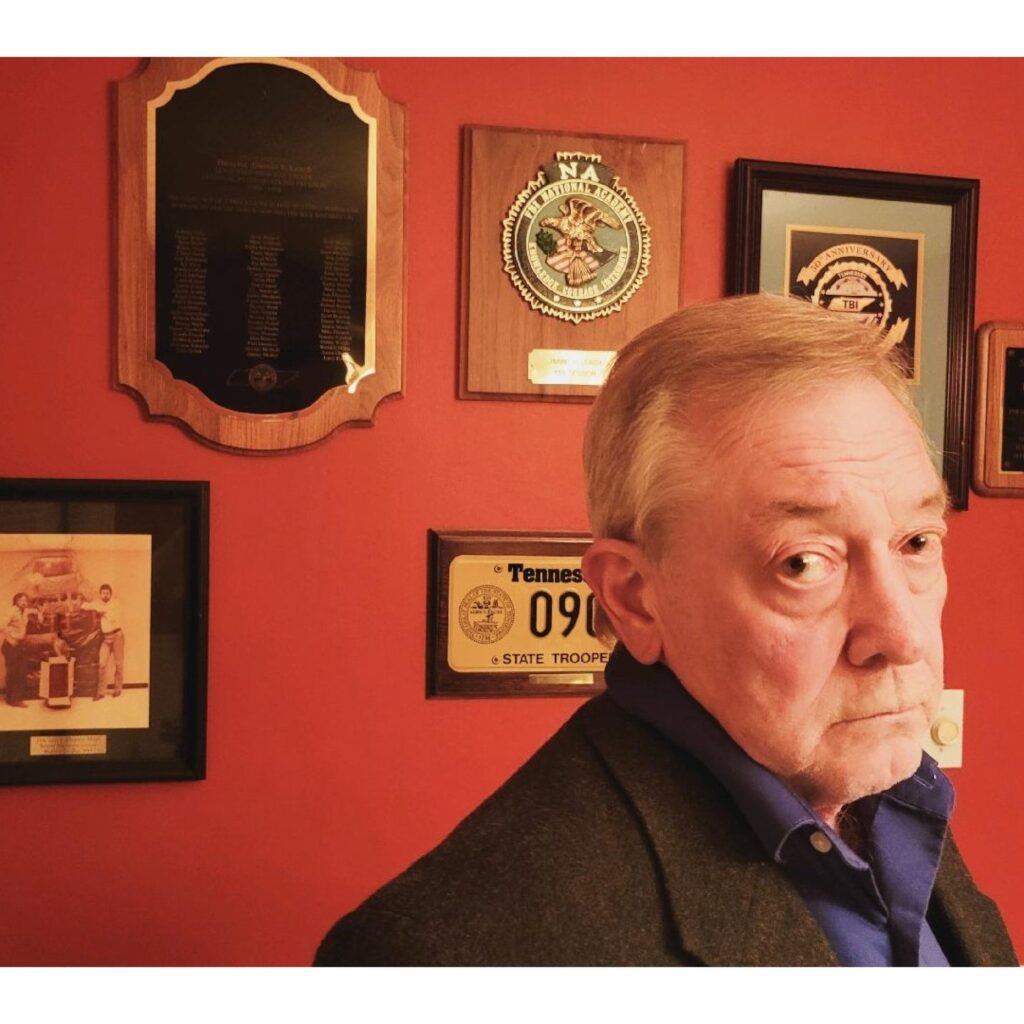
Jim Leach began his law enforcement career in 1975, and he shares his insights as a multimedia analyst and consultant for Golden Media Group in matters relating to Criminal Justice.
Mr. Leach taught police/media relations for Training Services Group, Inc. for more than 25 years.
Why don’t police tell us all they know? What are they covering up?
Police are not perfect, and they make mistakes. They are taught, as Lanny Davis told Bill Clinton, if you make a mistake, tell it early, tell it all, and tell it yourself. I know, because I taught hundreds of them this myself.
There are many reasons why everything is not divulged to the public (us) through the media every day, in press releases or during press conferences.
Details about the crime or the crime scene should only be known to investigators working the case to maintain the credibility of statements. Let’s say a homicide victim was strangled to death with a green towel. If a suspect or a witness knows this detail, it adds great credibility to their statement. A jury gives this type of evidence a lot of consideration.
The flip side is that if a potential suspect begins to “confess” and does not know specific, significant details, he is probably making a false confession. A person who claims to be a witness but cannot give you information that you feel they should know may be taking up valuable time that you could be using to question a truthful witness.
If too much information has been made public, these techniques cannot be applied. When a prime suspect, who is trying to retract a confession, is confronted with knowing intimate details of the crime, the interview may be over if they can truthfully say, “I saw it on TV!”
Of course, if the wrong information is released, the guilty party may have a chance to cover up or dispose of evidence. Witnesses may be threatened, harmed, or worse.
Too much transparency can help the bad girl to escape justice. Let’s use the Nancy Guthrie case in Tucson, for example. If the media announces that the search for the suspect is centered at the U.S.-Mexican border and that’s where the suspect is, she may decide it’s a good time to visit Colombia, South America.
If investigators or prosecutors try to be too open, they run the risk of giving an opinion that is proven later in the case to be wrong. Jurors will hear about it, maybe even see a video. A good defense attorney will try to convince a jury that the first opinion was right, and their client was wrongly arrested!
As much as we’d all like to be armchair detectives, we need to remember that the first priority of the police is to catch the bad guy/girl and ensure justice is done, not to keep us informed of everything that is going on in the investigation.